
1. Introduction: Modern Industrial Stucco for Tropical Architecture
In tropical environments like Metro Manila and the Philippine provinces, traditional exterior masonry finishes face relentless weather exposure—from heavy monsoon rainfalls to intense heat and humidity. Standard site-mixed cement renders and painted plaster walls frequently suffer from moisture absorption, paint peeling, hairline cracking, and recurring repainting costs.
To solve these persistent structural and aesthetic pain points, Stuccoat by Stucco Manila offers a modern industrial wall and floor finish solution. Stuccoat is a pre-pigmented, hydrophobic (water-repellent) polymer-modified lime-cement mortar engineered for indoor and outdoor masonry surfaces. Because the color pigment is built directly into the mortar matrix, Stuccoat completely eliminates the need for topcoat painting, primers, or secondary liquid sealers—offering an eco-friendly, low-maintenance aesthetic that combines tropical warmth with contemporary industrial elegance.
2. Stucco Pricing Guide in the Philippines (2026 Rates)
Understanding material and labor expenses is critical for project budgeting. Based on official pricing studies conducted for Stucco Manila, commercial rates are structured across three main financial models: per bag (materials only), per square meter (materials only), and complete supply-and-installation packages.
A. Per Bag Pricing (Materials Only)
Purchasing materials directly in standard 20 kg bags offers the following retail pricing breakdown (VAT-inclusive):
- Stuccoat / Superfine Skimcoat (20 kg Bag): ₱2,069.76 per bag (VAT-inclusive; ₱1,848.00 SRP VAT-exclusive + ₱221.76 12% VAT).
- Stucco Render (20 kg Bag): ₱1,128.96 to ₱1,290.24 per bag (VAT-inclusive; ₱1,008.00 to ₱1,152.00 SRP VAT-exclusive).
B. Per Square Meter Material Rates
A single 20 kg bag of Stuccoat yields a material coverage of 10 to 14 m² at a standard 1 mm application thickness. Accounting for jobsite application safety margins:
- Stuccoat Material Cost: ₱197.57 to ₱206.98 / m² (VAT-inclusive).
- Stucco Render Material Cost: ₱344.96 to ₱376.32 / m² (VAT-inclusive; assuming approx. 3 m² yield per bag for heavier base coats).
C. Per Square Meter Package Rates (Supply + Professional Installation)
For clients seeking end-to-end project execution, bundling Stuccoat material with skilled labor provides a cost-competitive solution:
- Stuccoat Supply & Labor Package: ₱1,475.71 / m² (VAT-inclusive; ₱1,317.60 SRP VAT-exclusive). This incorporates a direct labor and installation cost of ₱600.00/m² alongside raw material logistics.
- Stucco Render Supply & Labor Package: ₱1,636.99 to ₱1,665.22 / m² (VAT-inclusive).
Why Stuccoat Saves Money on Overall Project Budgets
While standard skim coats require separate purchases of bonding primers, acrylic topcoat paints, and waterproofing liquid membranes, Stuccoat delivers significant overall cost savings:
- Zero Paint Costs: Pre-colored mortar matrix eliminates primer, tinting agents, and exterior/interior paint materials and labor.
- Integrated Hydrophobic Protection: Rilem Test 11.4 shows 0.0 ml/min water absorption, repelling moisture naturally without post-applied sealers.
- No Site Sand Required: Delivered as a factory-premixed dry mortar—only clean water is added on site, eliminating sand procurement costs and raw material inconsistency.
- High Yield Thin Profile: Applied at 1–2 mm thickness (approx. 1.0 kg/m² per 1 mm profile), minimizing material handling and freight costs.
3. Step-by-Step Installation & Application Guide
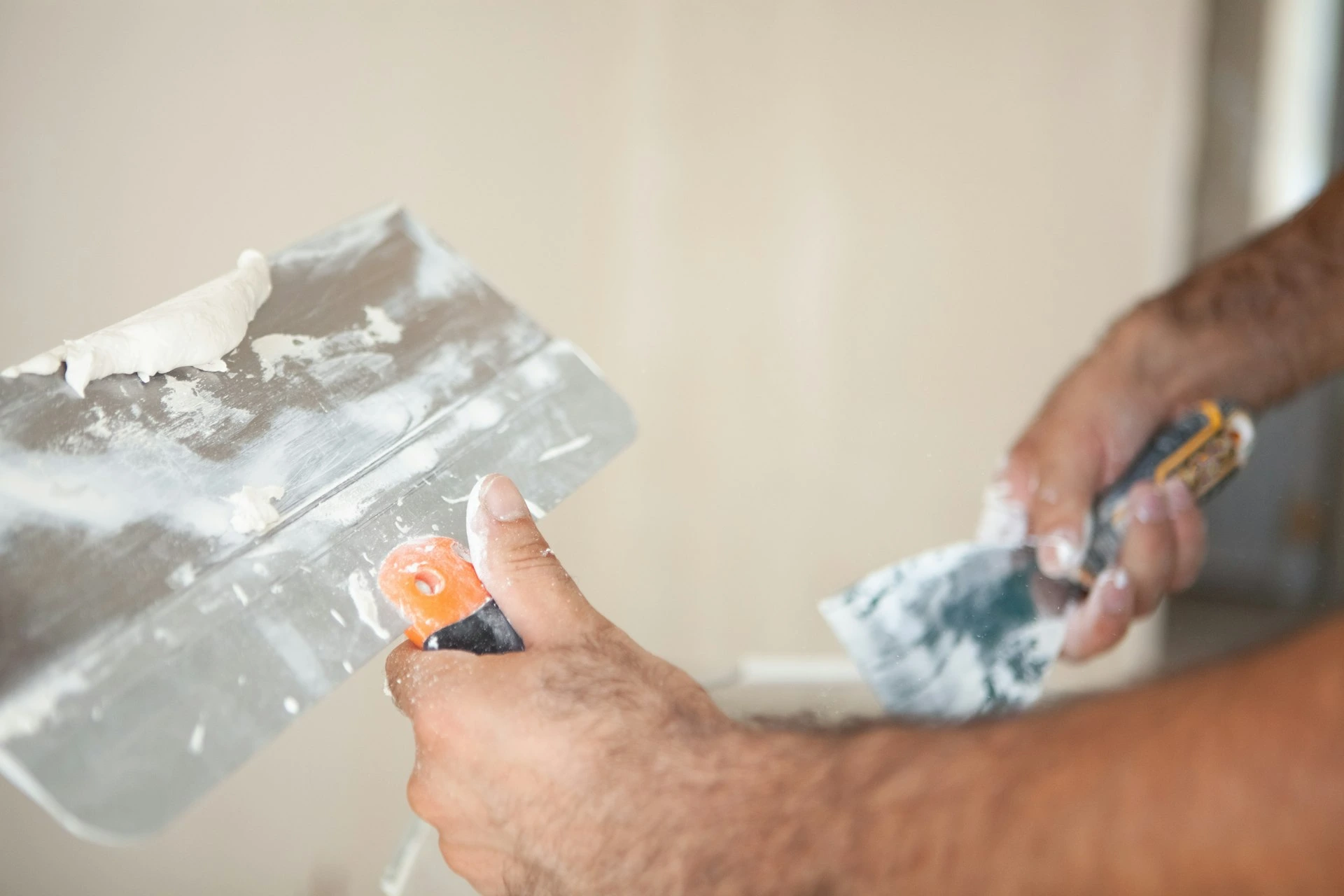
Achieving a flawless, long-lasting industrial finish requires following manufacturer technical specifications during preparation and application.
A. Substrate Compatibility & Preparation
Stuccoat is formulated for exceptional adhesion strength (>1.0 N/mm², Class B fracture pattern) across rigid and semi-flexible mineral substrates, including:
- Concrete and masonry walls
- Existing cement renders
- Fiber cement boards
- Plywood and wooden paneling
Preparation Rule: Substrates must be sound, clean, dry, and completely free from dust, loose particles, oil, grease, or form-release compounds. Surface irregularities or deep gouges should be ground down or patched prior to application.
B. Precision Mixing Protocol
- Water Ratio: Combine the dry powder strictly with 40% ± 1% clean water by weight—approximately 8 liters of water per 20 kg bag.
- CRITICAL RULE: Do NOT mix with sand. Adding sand dilutes the polymer concentration and ruins material adhesion and water repellency.
- Mixing Procedure: Use an electric paddle stirrer to blend the powder and water until a smooth, homogenous paste is achieved. Allow the mixture to slake for 5 minutes, then re-stir briefly before application.
- Pot Life: The mixed mortar remains workable for up to 3 hours at ambient temperature.
C. Application Technique
- Application Method: Apply manually using a steel trowel or spatula, or mechanically via spray equipment.
- Layering: Apply in 1 or 2 thin coats. Level out the material smoothly across the wall or floor surface using a flat spatula.
- Thickness Control: Maintain a total dry thickness of 1 to 2 mm. Do not exceed a maximum thickness of 3 mm to prevent slump or cracking.
4. Jobsite Safety (SDS / GHS) & Maintenance Guidelines
Safety compliance and long-term care protect both installation crews and property investments.
A. Occupational Health & Safety (GHS Compliance)
Stuccoat contains Portland Cement (20–40%) and Calcium Carbonate (>50%), presenting an alkaline pH of approximately 12 when wet. Official Safety Data Sheet (SDS) guidelines classify the dry and wet mix under GHS Signal Word Danger:
- Hazard Warnings: Causes skin irritation (H315), may cause an allergic skin reaction (H317), causes serious eye damage (H318), and may cause respiratory irritation from airborne dust (H335).
- Required PPE: Installers must wear impervious rubber gloves, protective boots, long-sleeved clothing, eye/face protection (goggles), and a dust mask/respirator during mixing.
First Aid Protocols:
- Eye Contact: Do not rub eyes. Immediately flush with clean water for at least 15 minutes (remove contact lenses) and seek medical attention.
- Skin Contact: Wash exposed skin thoroughly with soap and water.
- Inhalation: Move the individual to fresh air immediately.
- Ingestion: Rinse mouth with water. Do NOT induce vomiting; drink plenty of water and consult a physician.
- Storage & Disposal: Store bags off the floor in dry, well-ventilated conditions (12-month shelf life). Dispose of empty packaging or surplus material at authorized construction waste facilities—never dispose via household trash or waterways.
B. Long-Term Care & Maintenance
Maintaining the beauty of Stuccoat is simple due to its non-porous hydrophobic surface:
- Routine Cleaning: Wash surfaces using low-pressure water or a soft-bristle brush to remove dust and dirt. Avoid abrasive harsh chemicals or high-pressure power washing.
- Inspection: Conduct periodic visual checks for surface movement in structural base walls.
5. Contractor & Homeowner Frequently Asked Questions (FAQ)
Q1: Is primer or topcoat paint required after applying Stuccoat?
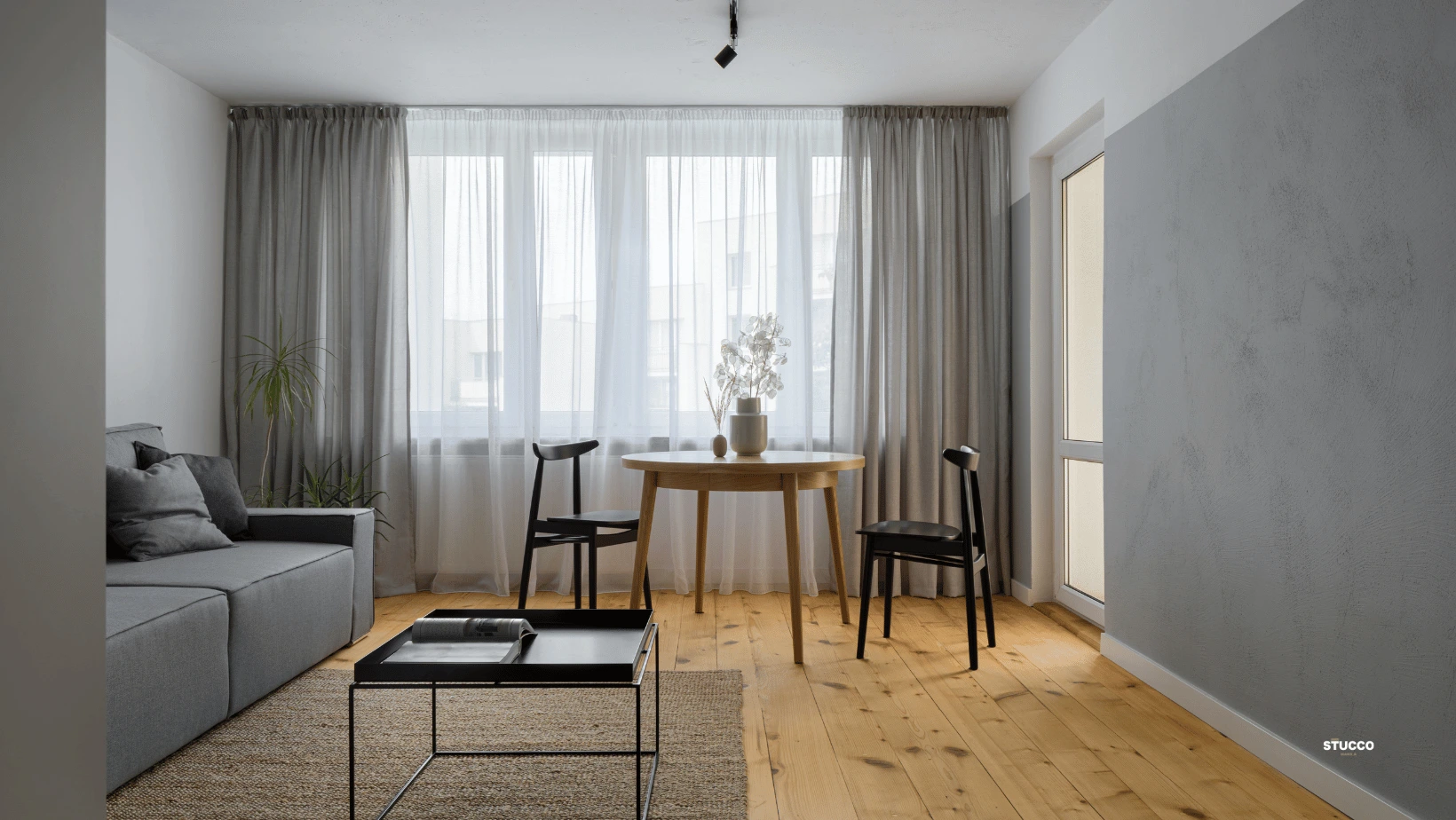
No. Stuccoat is a pre-colored, hydrophobic polymer-modified mortar designed explicitly to remain unpainted. Leaving the surface unpainted preserves its natural cementitious texture and water-repellent properties.
Q2: Can Stuccoat be applied directly over fiber cement board or plywood?
Yes. Thanks to its flexible polymer additives, Stuccoat achieves strong adhesion (>1.0 N/mm²) over rigid masonry as well as semi-flexible sheets like fiber cement board and plywood.
Q3: How many 20 kg bags of Stuccoat do I need for a 50 sq.m wall project?
At the standard yield of 10 to 14 m² per bag (at 1 mm thickness), a 50 m² area requires approximately 4 to 5 bags. We recommend ordering 5 bags to account for minor jobsite wastage.
Q4: Can I add fine white sand to increase the batch volume?
No. Stuccoat is a factory-premixed mortar. Adding sand dilutes the polymer concentration, weakens adhesion strength, and compromises water repellency. Only add clean water.